

This past July, I packed my bags for the 2026 American Guild of Organists National Convention in St. Louis, Missouri. It was my very first organ-exclusive conference, and I was all by myself. Usually, I am the one tagging along with friends to comprehensive music conventions, safely hidden in a pack of musicians. I arrived not quite knowing what to expect, but I left with a heart full of memories, a stack of new repertoire, and a few new numbers in my phone.
A Vibrant Community
The first thing that shocked me as the week unfolded was the surprising number of people this convention drew. I had signed up for a few shifts as a volunteer at the convention. I thought the crowd would be almost entirely organists and music directors. I was wrong. At my shifts at the registration desk, we welcomed curious St. Louis locals, neighborhood music lovers, and folks who just wandered in because they heard something big was happening downtown. People would buy a pass for a single event, and then got interested in signing up more or buying tickets for their friends on the spot. This was not a rare incident; it happened over and over, all week long.
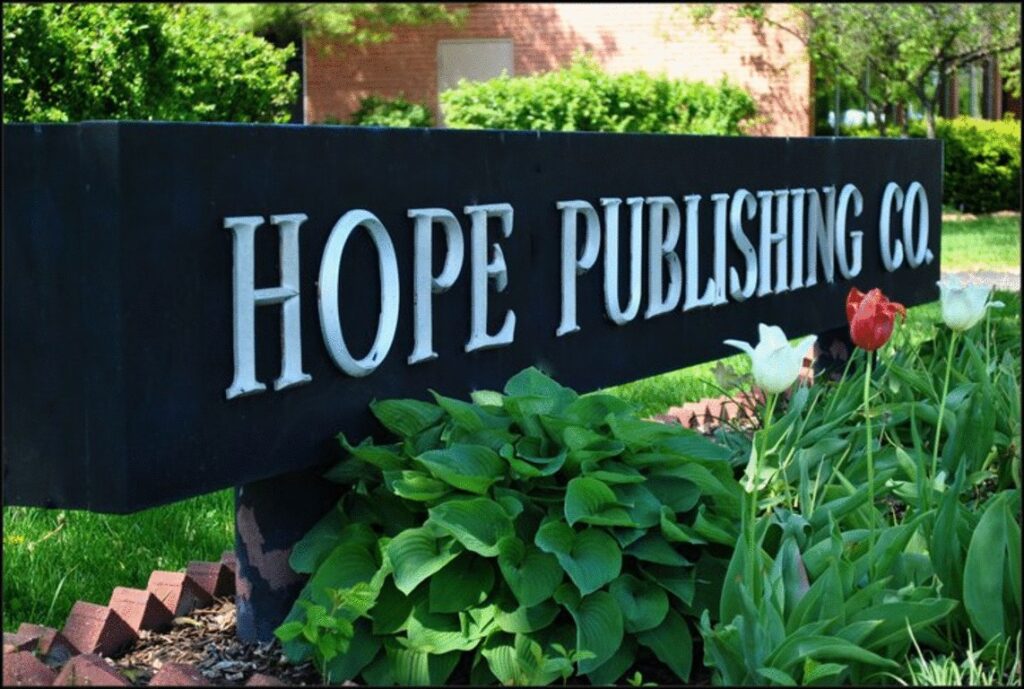 The enthusiasm was contagious. On Thursday, during my two-hour shift at the desk, I witnessed a relentless stream of people asking where to find the Hope Publishing reading session. I had to politely point the way while secretly wondering what on earth this reading session was about. I soon learned they are the major choral music publisher, and apparently, their reading sessions are the equivalent of a rock concert in the choral world. Over 200 people registered for it! Even with only three minutes left on the clock before the session ended, people were still coming to the desk to inquire about the session.
Another mind-blowing number came during the Hymn Festival at Manchester United Methodist Church. I was ushering that night. Every pew on both floors was packed. It was not just convention attendees, either; residents had bought tickets out of pure love for congregational singing. I didn’t get an exact headcount, but at least a thousand people showed up in that sanctuary.
Nowadays, I often hear in music circles that the organ is a dying instrument and church congregations are shrinking. Standing in that booming, vibrant room, watching the massive crowd of everyday people show up on their own time just for the music, I felt incredibly proud. If anyone tries to tell you that church music is dying, just send them to an AGO Convention. The community is alive, loud, and we’re still singing.
A Feast of Organ Music
The first activity I attended during the whole convention was the final round of the 2026 NYACOP (National Young Artists Competition in Organ Performance), and it set an incredibly high bar for the rest of the week. It was my first time hearing an organ competition live. All three finalists were required to prepare a balanced public recital under 40 minutes, including three required pieces. All three were undoubtedly top-tier organists. Yet Mitchell Miller, the winner, had an extra layer of sound magic. His Bach performance was different from the very opening. The articulation was so clear that I could hear his hands and feet moving as three distinct, independent voices. That is one of the hardest challenges when playing Bach counterpoint, and he made it sound effortless. His performance of Rachel Laurin’s Étude Symphonique pour pédale solo was so stunning that I ordered the score the second I got back to the hotel. He was also amazingly imaginative with his registrations. Every time the main theme returned, he changed the underlying color, making the music feel fresh and waking up audiences’ ears all over again.
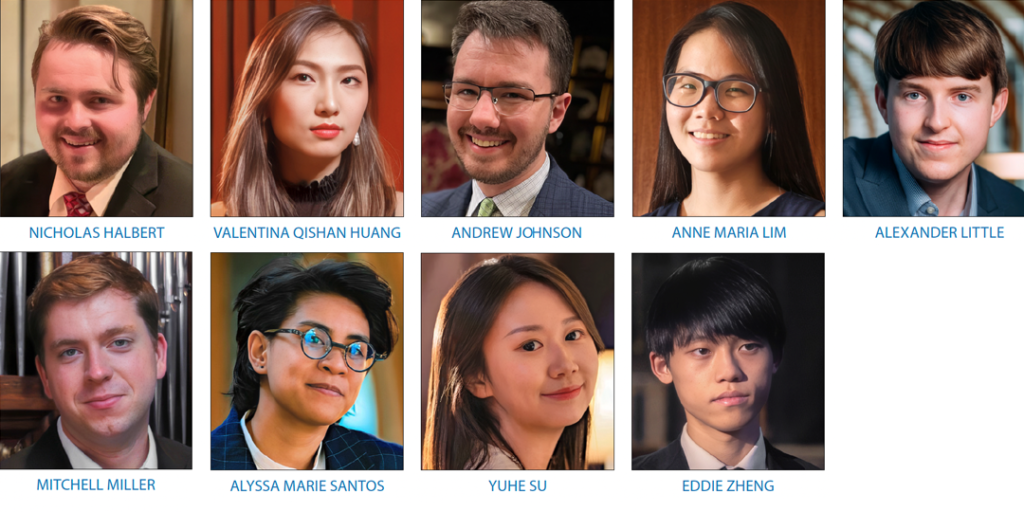
2026 National Young Artists
Another organist who left a deep impression on me was Bryan Anderson. He performed at Third Baptist Church on a sweltering midday afternoon. He opened with the Overture from Verdi’s La forza del destino, and it stunned the entire room into silence. I am not exaggerating when I say I immediately started searching for the sheet music on my phone, only to find out he had arranged the whole thing himself. He also played Gwyneth Walker’s One Land, a convention commission consisting of seven short movements written for the 250th anniversary season. The performance was a perfect marriage of an inspiring composer and a creative performer, blending brilliant registrations with familiar folk melodies used in the music. The church’s antiphonal division actually speaks from the ceiling at the back of the nave. Whenever those echo effects kicked in directly overhead, I watched a few curious people around me tilt their heads up, trying to find exactly where the sound was coming from.
Of course, the musical feast did not stop there. At the Cathedral of St. Peter in Belleville, David Ball and Emma Whitten (our local CAers!) performed a duet on two organs with consoles sitting quite far apart. Partway through the music, they literally swapped places and walked the length of the church. I still have no idea how they rehearsed that two-organ repertoire under such a setting, but the balance between the two instruments remained absolutely flawless. Then at First Presbyterian Church of Kirkwood, Christopher Houlihan paired with soprano Christine Brewer. The combination of the Casavant organ and the soprano’s angel-like voice on their final three pieces (“Pie Jesu”, “Ave Maria”, and “O Divine Redeemer”) melted my heart.
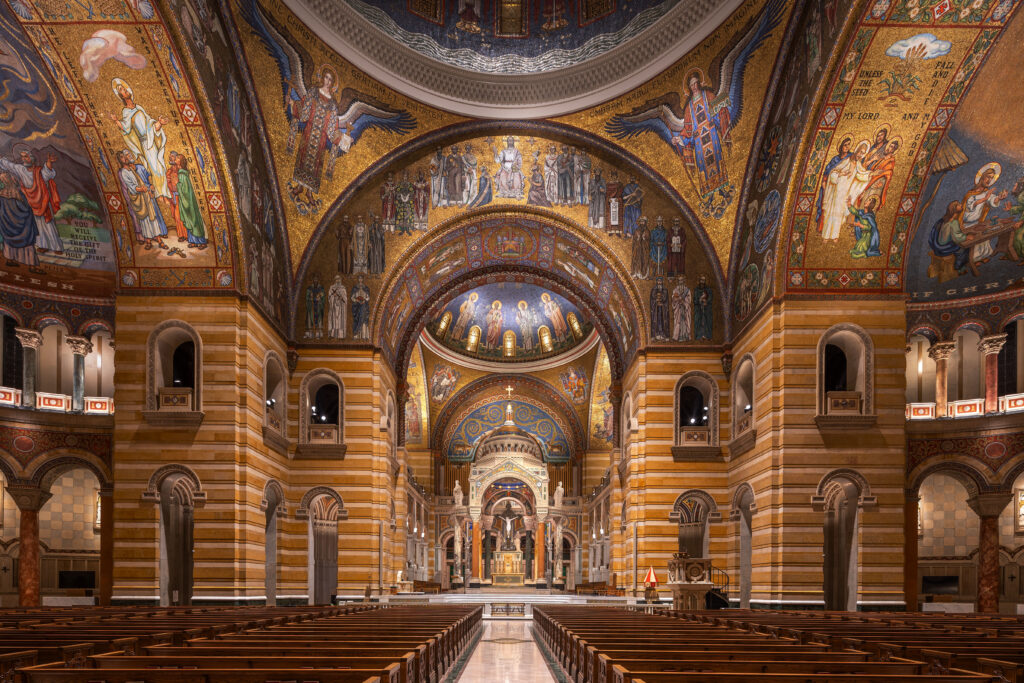
Cathedral Basilica of St. Louis
And the Cathedral Basilica of St. Louis deserves its own mention. It was, hands down, the best venue of the entire convention. I told my friend afterward that you could actually track the sound of the final chord. When the organist released the keys, you could hear the reverberation roll all the way from one end of the massive church to the other before slowly fading into the air. It was absolutely a transcendent acoustic experience.
Chelsea Chen closed out the entire convention with a stunning program. She played everything from a new Jonathan Dove commission inspired by Bach and Messiaen to gorgeous arrangements of Chinese folk melodies. Then she offered her own arrangement of the Super Mario music as an encore. It was technically dazzling and genuinely hilarious. Later that night, I kept hearing people humming the Mario theme.
A Thousand Voices
There’s one place at the convention that stays open until midnight: the Exhibition Hall. Honestly, it felt like an amusement park for musicians. Booths from publishing houses and organ builders lined the room, day and night, and everywhere I looked, someone had headphones on, nodding along as they tried out the newest organ console, or was elbow-deep in a box of freshly published scores, digging for treasure. I was especially impressed by a system called Keychange Keyboard, designed by an organist, that lets you manually adjust the tracker action on your own organ, at home or in church, so that the weight and resistance of the keys can be fully customized to your preference. It was almost magical to try. It got me imagining how amazing it would be if the church music world could hold a flea market like this every so often, a place for us to trade new music, new tools, new ideas. How many good ideas might be born out of that kind of collision?
Another important part of this convention was its various workshops. In Robert McCormick’s improvisation session, over 150 people crowded into the room. Some even needed to stand along the walls or sit on the floor. One session was hardly enough time to explore the art of improvisation thoroughly. And he generously provided a packed seven-page handout for everyone to take home and study. I could feel this genuine eagerness in the room. People were longing to build a stronger skill set to elevate worship services. There were also workshops on church leadership, arranging scores for church anthems, working with children’s choirs, physical therapy for organists’ muscles, and the latest organ technology. Whether you were an organist, a music director, or an organ builder, as long as you had this shared passion for growth, there was something for everyone.
Last, I want to talk specifically about the Hymn Festival. Hymn festivals are not exceptionally rare, but it is definitely not every day you get a massive organ, a full orchestra, a handbell ensemble, and several combined choirs all in one place, in front of a full house of over a thousand people. The lead priest of that church even joked to me that the AGO told him that 999 organists would be in the room that night. Coming mostly from a piano background where playing is often a solo activity, congregational singing was not one of my everyday experiences. However, I will admit that there were several moments that night where I got goosebumps for all the right reasons.
Singing «When in Our Music God Is Glorified» caught me completely off guard. That hymn carries some personal history for me. Singing it in a packed room, surrounded by that much sound, I felt an unusual yet profound kind of power. Midway through the service, there was a bit of spoken word, almost like a sermon dedicated specifically to honoring church musicians. We closed the night singing «Now Thank We All Our God» alongside a newly commissioned hymn called «To the Endless Day». It is a beautiful new text set to the familiar tune KINGSFOLD, exploring the deep power of music in worship. It honestly felt like a love letter written directly to us. I looked around and saw fellow organists sitting beside me and behind me, and their eyes were shining.
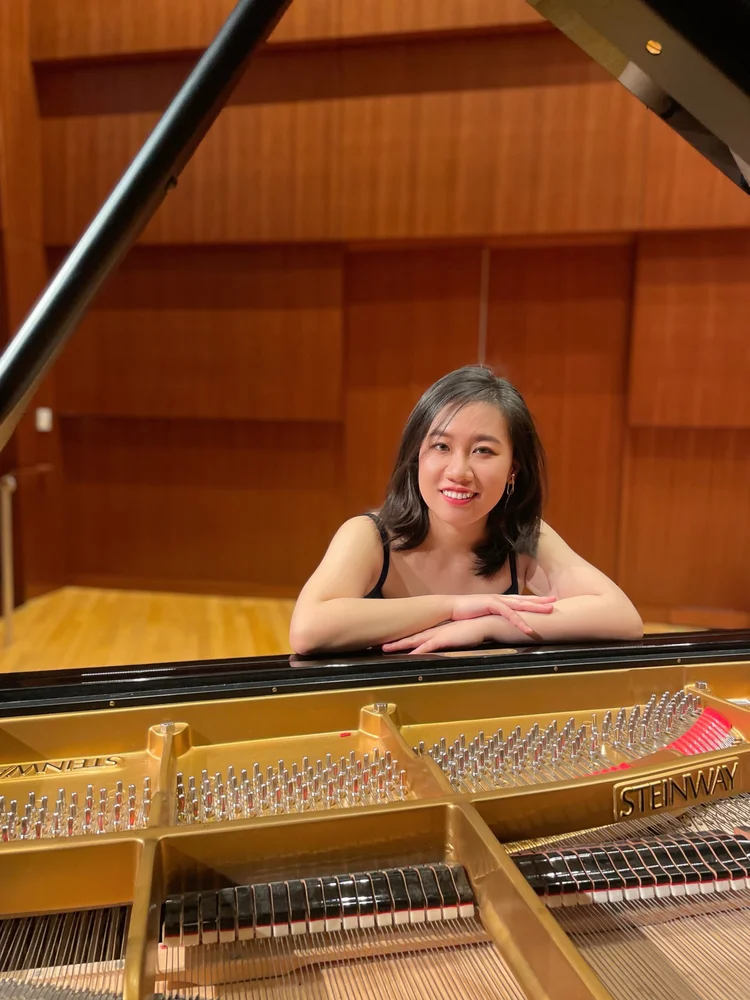 Hailed as a «firecracker at the console,» Dr. Peiyao Yu is a keyboard artist specializing in piano, organ, and carillon. She has performed across major stages in China, Italy, and the United States.
As an advocate for historical and contemporary music, she has notable organ engagements including the French Organ Festival, the Bach in Bales conference, and a solo appearance for the Reuter Organ Company’s 105th Anniversary. She has also premiered works by Eve Beglarian and Lori Laitman and formerly served as Creative Advisor for the Asian Classical Music Initiative.
Her scholarly and interdisciplinary work remains highly active. In May 2026, she presented the lecture recital «The Timeless Act of Touch: Bridging Past and Future in Modern Soundscapes» at the American Matthay Piano Festival. In July, she hosted a roundtable discussion and performed in the opening concert at the Sound x Image x Dialogue Immersed Gallery.
Based in Los Angeles, she collaborates with Opera Italia and her chamber ensemble Almost Quintet. Supported by a recent grant, she is developing the Music is Healing project. Dr. Yu holds a Doctor of Musical Arts from the University of Kansas and a Master of Music from the University of Michigan.