

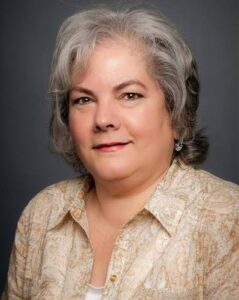
As the recipient of the Distinguished Catholic Composer of the Year award from the Association of Catholic Publishers Excellence in Publishing, Lourdes Montgomery recounts her life of music-making and the journey it has taken her on.
In Havana, Cuba, around 1959, inside a colonial house built by the Spanish in the late 1890s, sat a little chubby 3-year-old girl with straight black hair in front of a toy piano. Once she pounded her hands on the minuscule black-and-white keys, she was hooked by the sound that leaped into her ear.
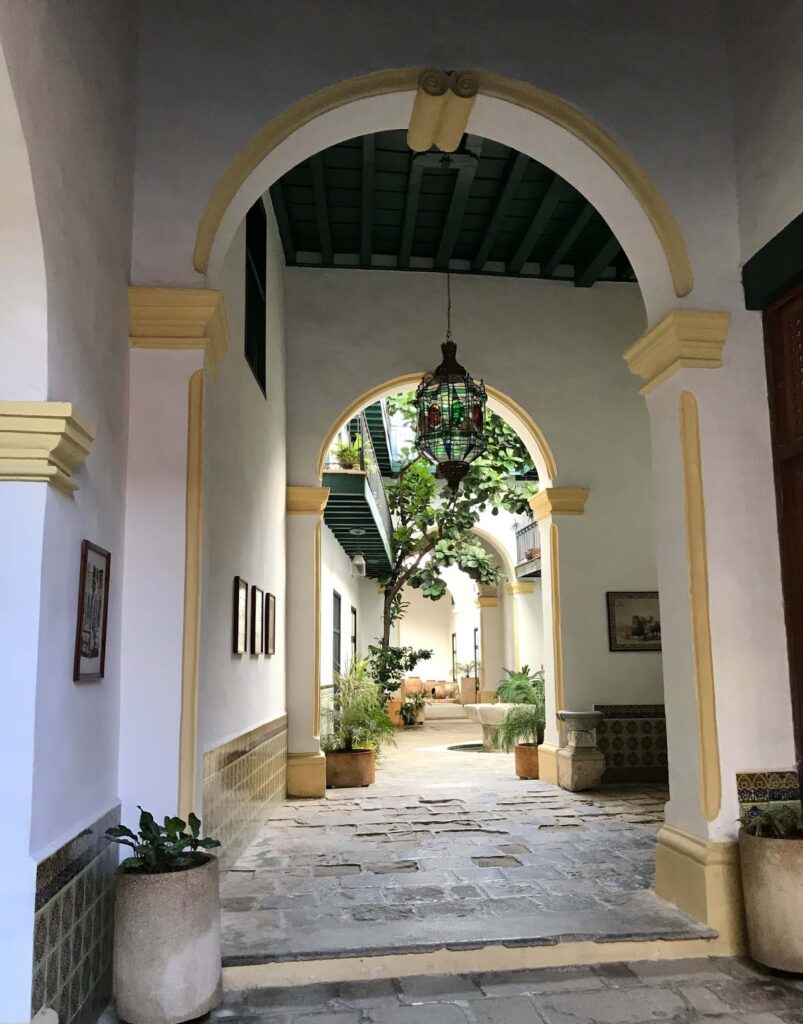
Two years later, that same little girl and her family were forced to leave the precious island of Cuba for political reasons, carrying with them only what they could hold and the memories of the home where her love of music had been planted. At the airport, Delia — her mother — was suddenly denied permission to leave the island. Still, she insisted the rest of the family go, determined to spare them from living under a communist regime. She pressed them forward, urging them to board, even as she remained behind.
But that is another story — one filled with courage, sacrifice, and the kind of love that sends a family into an unknown future so they might have a chance at freedom.
Sometime in the third grade, Delia finally arrived in New Jersey, where the family — Papi, Abuela, and the little girl, whom I will now simply call me — had settled after their initial arrival in Miami, Florida. Delia’s arrival completed the circle that had been broken at the airport years earlier.
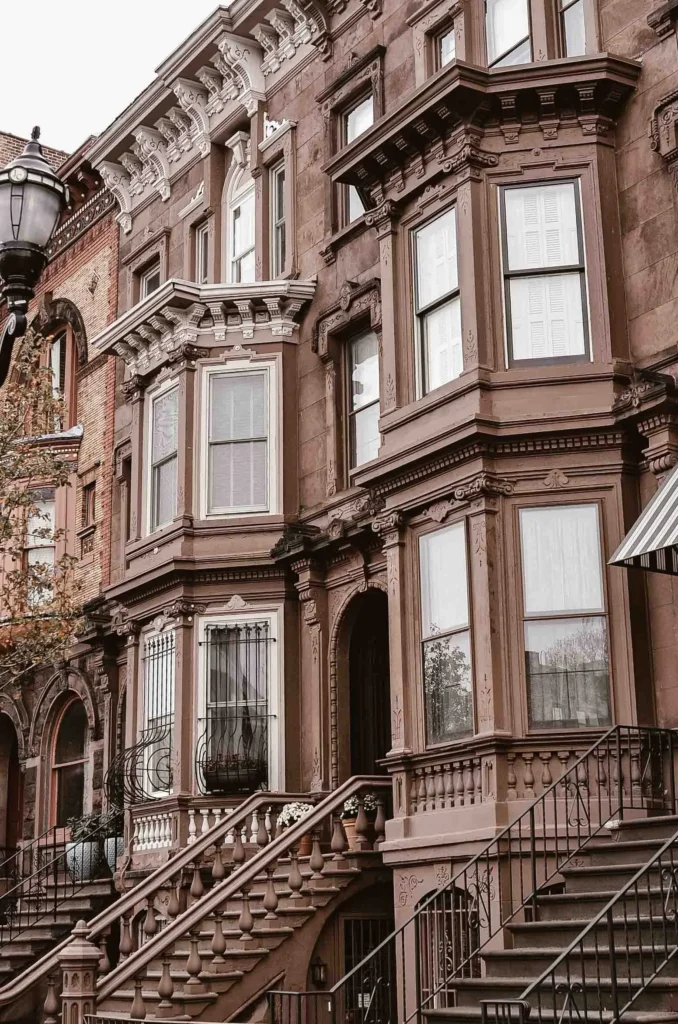 The brownstone we called home in New Jersey was one of those tall, skinny row houses — a little slice of Sesame Street in real life. Its façade was a warm, weathered brown, the sandstone darkened by decades of winters. A short flight of steps — the stoop — led up to the front door, framed by black wrought-iron railings that had been gripped by countless hands before ours.
It’s important to describe this setting because my musical career was born on the other end of that apartment. I lived on one end of the building, and at the opposite end lived two sisters — Evelyn and Madeline — who were about my age.
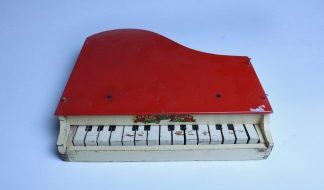 Those sisters owned a little toy piano much like the one I had ruined in Cuba — I neglected to mention earlier that I popped up the plastic keys to find out where the magical sound came from! Evelyn and Madeline kept theirs in perfect condition, and whenever I visited their apartment, they would play a small tune composed entirely on the black keys. The melody fascinated me, and so I begged them to teach it to me. It was simple, bright, and full of that same mystery that had captured me years earlier in Havana.
Each time I visited, the sisters taught me a little more of the piece I loved so much. We sat together at their tiny piano as they patiently showed me one section at a time. After several visits — mistakes and triumphant little breakthroughs — I finally learned what I considered a masterpiece.
It was called Los Paticos.
And just like that, in a brownstone building in New Jersey, my musical path continued— not with a grand instrument or formal lessons, but with a toy piano, two kind sisters, and a melody that had waited for me since Cuba. To this day, I thank the good Lord for placing those sisters in my path; their kindness, their patience, and that little toy piano were the first stepping stones on the musical journey I didn’t yet know I was walking.
The next character in my story — the one who encouraged my mother to enroll me in piano lessons — would take that spark and fan it into something larger. At the risk of boring you, my reader, I will continue to pursue the music ministry God created me for.
On one fortuitous visit, we went to the home of someone who had helped my Papi find a job. That family happened to have a daughter who took piano lessons from a Cuban pianist — a woman named Rubi Zayas, who is still alive today and living in Miami, Florida. Their living room held an upright piano that stood like a proud centerpiece.
Without hesitation, I asked the lady of the house if I could play something on the piano. My mother immediately protested, “Oh no, she will ruin the tuning of the piano!” Imagine my tiny hands — barely strong enough to press the keys, let alone disturb the tuning.
Lucky for me, the woman smiled and agreed to my request.
I climbed onto the bench, feet dangling, and placed my hands on the keys. Then I played Los Paticos — the little black-key melody Evelyn and Madeline had taught me in our brownstone. My mother’s jaw dropped so far it practically hit the floor. When she finally recovered, she said, stunned, “I had no idea Lourdes could play!”
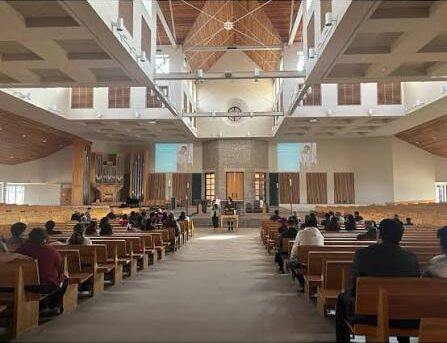
St. Vincent de Paul Catholic Church in Rogers Arkansas
That moment in 1964— that tiny performance on a stranger’s piano — became the turning point of my life. Through the Holy Spirit’s intervention, my fate was quietly sealed. He knew that in 1986, 22 years later, Mother of Christ Catholic Church in Miami would need a musician to lead the congregation in singing. He knew that in 2005, St. Vincent de Paul Catholic Church in Rogers, Arkansas, would need a bilingual music director to serve two different cultures.
Long before I understood any of it, God was already arranging the steps.
After living in New Jersey for a year or so, we moved south to Little Rock, Arkansas, to live close to my madrina Chique and padrino Esteban. They had settled there shortly after my padrino’s arrival from Cuba, where he found work as a doctor at a Black veterans’ hospital.
From there, the next prominent character in my story appeared in the gentle shape of a quiet, sweet nun named Sr. Celine. She was the one who formed me as a young composer, guiding my musical imagination from fourth through eighth grade. With her patient spirit, she nurtured something in me that I didn’t yet understand — the ability to create music, not just play it. I mentioned her in my second collection.
Sr. Celine taught me using a book series called the Robert Pace Method, a curriculum that introduced young musicians to the building blocks of composition. She showed me how to fashion a simple series of chords — a chord progression — into eight-bar phrases. The first four bars posed a musical question, ending on the dominant chord. In the key of C, that meant stopping on a G chord, a harmony that leans forward, asking for resolution. The next four bars began like the first measure but ended differently, pulling the ear back toward the tonic — the home chord, the C that feels like a musical exhale.
Those early lessons shaped me more than I realized at the time. To this day, I still use many of her teachings, along with techniques I’ve learned from others God has placed in my path. One of them is my editor, Stella García-Lopez, who taught me the importance of placing stressed syllables on strong notes — a small detail that can transform the clarity and beauty of a sung text.
Another essential principle in composing for liturgy is what is called “marrying” the music to the word. If the text speaks of heaven or celestial heights, the melody should rise, reaching upward. Conversely, if the text expresses descent, sorrow, or depth, the music should reflect that movement. For example, in my setting of Psalm 130 (129), Out of the depths I cry to you, O Lord, the melody begins low, almost buried, and gradually ascends as the words turn toward hope — “to you, O Lord.” The music mirrors the prayer, lifting the soul as the text lifts its plea.
These techniques — learned from a quiet nun in Arkansas, refined by mentors over the years, and guided always by the Holy Spirit — have become the foundation of my work as a composer. They are the tools through which I shape prayer into melody, and melody into ministry.
In the hallway of her studio, Sr. Celine kept a picture of St. Cecilia — the patron saint of musicians — gazing down at every student who crossed the threshold. I would stare at that picture as I waited for my turn to enter my happy place. Some students entered with dry, barren soil. Others carried rocky soil or thorny soil tangled with distractions. And a few, by God’s grace, arrived with fertile soil ready to receive the seed of music that perhaps will serve him one day. The love of music is born in some, but not in all. It cannot be forced upon a child, no matter how noble the intention. Music should never be used to polish an individual or to create a false shine for the sake of appearance. Every child is different, every soul unique, and each one must discover their own passion in their own time. Some hearts bloom through melody; others bloom through science, service, or silence. The gift is never identical, and it is never imposed. It is revealed.
My life went on: at this time, my family moved to Miami, Florida. I went to high school while continuing my piano lessons with Emilita Estivil, who was actually a violinist. During high school, it was another pivotal time as my mother volunteered us to sing in the church choir. She helped plant the seed that led me to learn many Spanish hymns I still use today, composed by composers in Spain who began writing after Vatican Council II. We sang the works of Cesáreo Gabaráin, whose melodies carried a gentle pastoral warmth. We learned the hymns of Juan Antonio Espinosa, whose writing blended folk simplicity with theological depth. And we sang pieces by Miguel Manzano Espinosa, whose modal lines and careful attention to text helped shape the sound of Spanish liturgy in the 1970s and beyond.
After high school, I went on to study music theory and composition, married Michael Montgomery – a fine husband who was a symphonic bass player whose musicianship enriched my own- had two precious children, Teresa and Michael (who is currently playing at a nearby parish of St. Steven’s), and eventually started working in nearby churches.
One most auspicious day arrived in the form of a simple telephone call. On the other end of the line was my next very important character in my journey, Father Juan Sosa, himself a respected liturgical composer whose music is published in the Flor y Canto hymnal, asking if I would help him engrave his music in Finale, the music notation program I had learned to use.
Those small beginnings, those fragile seeds, grew into a ministry
My “yes” became the fork in the road that blessed me beyond my wildest dreams. That yes opened doors I never imagined, connecting me to composers, publishers, and ministries that would shape the next chapters of my vocation. It was as if God had been waiting for me to reach that intersection — and with one word, he ushered me into a new landscape of possibility. During one of my working sessions with Father Sosa, I noticed a stack of neatly organized pages spread across his table. They were arranged in detailed columns by a staff member from OCP — Oregon Catholic Press — listing psalms, liturgical texts, and musical needs for upcoming publications. It was the kind of document only insiders ever saw, a glimpse into the world of professional liturgical music.
I mentioned to Father that I had written many psalms myself, including a simple setting of Jesus’ Beatitudes that, at the time, was sung only at Mother of Christ Church, my home parish. Without hesitation, he told me to gather all my compositions — every psalm, every hymn, every setting — and submit them to him as soon as possible. He was preparing to travel to Oregon to meet with the editors of OCP, and he wanted to take my work with him. And for this I am eternally thankful.
 Once my compositions reached the hands of the editors at OCP, they took notice. To this day, I sometimes wonder what caught their attention first. Perhaps it was the unusual chord progression — that Dm9 moving to a Gm7, slipping into a Bb/C, and resolving into a warm F major 7th. Or perhaps — and this is the explanation I lean toward — God’s grace simply shrouded their eyes and opened their hearts. After that moment, everything I had submitted to Father Sosa was accepted and published in Flor y Canto, the hymnal then being fashioned, which led to two collections: De la Cruz a la Gloria and Blessed be the Name of the Lord.
I could hardly believe it. Music that had lived quietly in my parish, sung by familiar voices at Mother of Christ Church, was suddenly being prepared for publication — destined to be prayed by communities I had never met, in places I had never seen. It felt as though God had reached into my life, lifted my little offerings, and placed them on a much larger table.
That season was a cascade of blessings, each one flowing from the simple yes I had given to Father Sosa, and from the years of seeds God had planted long before I knew what He was preparing me for.
In closing, as I look at my life through a rear-view mirror, I see how two plastic pianos — one destroyed by an inquisitive little girl desperate to discover where the magical music came from — became the first seeds of a vocation I could never have imagined. I see an unplanned trip to a foreign country, a little tune taught by two kind neighbors, and countless hours of piano lessons and music theory shaping my hands and my heart. I see how a quiet nun in Arkansas tended the soil of my soul, how Spanish hymns in Miami rooted me in the beauty of liturgical song, and how a simple “yes” to a priest opened a door that changed the course of my life.
Those small beginnings, those fragile seeds, grew into a ministry that has lasted more than forty years across two different states. This year — most unexpectedly, with the risk of sounding boastful — I received the Distinguished Composer of the Year Award from a group of Catholic publishers, a recognition that felt less like a personal achievement and more like a confirmation of God’s faithfulness. To quote Psalm 126: “The Lord has done great things in me, and I am full of gladness and joy!”
Every step, every melody, every blessing was part of His design, preparing me for the ministry He planted in me long before I understood the gift. I am the woman I am today because of the guidance of many generous people and the unfailing grace of God, who took a curious child with a broken toy piano and fashioned her into a composer whose music has touched hearts far beyond anything she ever dreamed.